

Perimenopause and sleep problems often arrive together: shifting hormones, night sweats, lighter sleep, anxiety, and bladder urgency can all wake you in the early morning. Sleep disorders like sleep apnea also become more common, so persistent wake-ups deserve a checkup. Good sleep habits help CBT. CBT is the first-line treatment for chronic insomnia, and treating night sweats with your prescriber often improves sleep. Compounded medications may fit specific needs with a prescription.
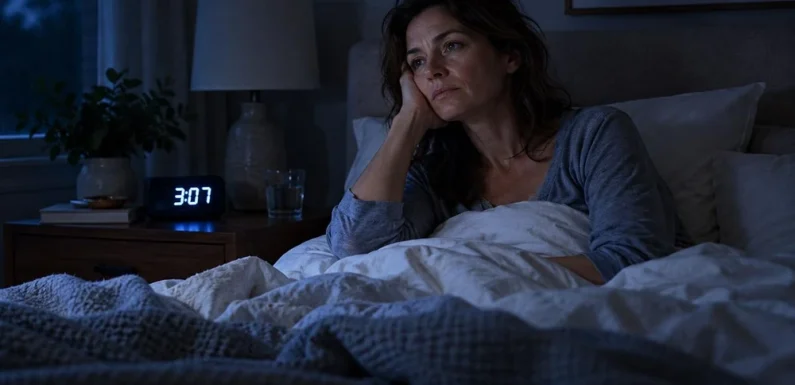
It’s 3:07 a.m. You’re wide awake, maybe damp from a night sweat, and your mind is already running through tomorrow’s to-do list. If this scenario is your new normal, perimenopause and sleep trouble may be connected. You’re not alone, and the struggle is real.
National data back these findings up. A CDC data brief on sleep and menopausal status found that 56% of perimenopausal women slept less than seven hours a night on average, compared with about 33% of premenopausal women. These figures come from 2015 survey data, which are still the most recent national CDC estimates by menopausal status.
In this guide, we explain why those early-morning wake-ups happen, how to tell hormone-related sleep changes from a sleep disorder, and what you can try tonight. We also walk through medical treatments to discuss with your prescriber. Finally, we’re honest about where a compounding pharmacy fits and where it doesn’t.
How Perimenopause and Sleep Are Connected
Perimenopause and sleep problems often arrive together. As estrogen and progesterone rise and fall unpredictably, they can disrupt temperature control, mood, and the body’s sleep-wake rhythm. CDC data show perimenopausal women are far more likely than premenopausal women to sleep under seven hours a night.
What the Numbers Show
The same CDC brief found that trouble staying asleep four or more times a week climbed from about 24% of premenopausal women to 31% in perimenopause and 36% after menopause. Feeling unrested was common across all groups. In short, sleep tends to get harder as the transition moves along.
When Perimenopause Starts
Cleveland Clinic notes that the average U.S. age at menopause is 52, and perimenopause can begin 8 to 10 years earlier. Sleep is only one piece of the picture. Our guide to other perimenopause symptoms covers the rest.
What New Wearable Data Show
In 2026, the Apple Women’s Health Study analyzed more than 94,000 nights of sleep data. Sixty percent of participants spent more time awake after falling asleep in the 18 months before menopause. Most of them linked those changes to the transition, which they noted often begins in the mid-to-late 40s.
“More than half of perimenopausal women sleep under seven hours, and many causes of 3 a.m. wake-ups are treatable.”
Why You’re Waking at 3 a.m.: The Most Common Culprits
Early-morning waking in perimenopause usually has more than one cause. Night sweats often strike in the early hours, and shifting hormones make sleep lighter and more fragile. Anxiety, bladder urgency, alcohol, and changes in the body clock can also pull you awake. Once you’re up, worrying about sleep can keep you there.
Night Sweats and Hot Flashes
Night sweats are hot flashes that happen during sleep. Harvard Health explains that these episodes often strike in the early morning, right when sleep is already lighter.
Shifting Estrogen and Progesterone
Hormones matter even without night sweats. According to the Sleep Foundation, lower estradiol (the main form of estrogen) and higher FSH, a hormone that rises as the ovaries slow down, are linked to more disrupted sleep.
Lighter Sleep and a Shifting Body Clock
With age, deep sleep shrinks and the body clock can shift earlier. That means the second half of the night is easier to interrupt. A small trigger that you once slept through can now wake you fully.
Anxiety and the Racing Mind
Once awake, many women start replaying worries. Frustration about being awake adds stress, which makes falling back asleep harder.
Bladder Urgency, Alcohol, Caffeine, and Late Meals
A full bladder is a common reason to wake. Alcohol may help you fall asleep but tends to fragment sleep later in the night. Afternoon caffeine and heavy late meals can also affect sleep.
Is It Perimenopause or a Sleep Disorder?
Sleep Apnea Rises Around Menopause
Obstructive sleep apnea means your airway repeatedly narrows or closes during sleep. The Sleep Foundation reports that it affects about a quarter of women before menopause and more than a third after. Loud snoring, gasping, or morning headaches warrant an evaluation.
Hormones and Breathing
A 2022 study of 774 women found that higher estrogen and progesterone levels were associated with lower odds of snoring and apnea symptoms. This shows an association, not cause and effect, and more research is needed.
Restless Legs Syndrome
Restless legs syndrome (RLS) causes an urge to move your legs, often at night. Among women aged 44 to 56 with sleep complaints, 53% had RLS, sleep apnea, or both. Hormone therapy does not treat either condition.
Other Look-Alikes
Thyroid problems, depression, and medication side effects can all mimic perimenopausal sleep trouble. Your doctor can help sort out the cause.
“Sometimes the 3 a.m. wake-up isn’t hormones at all, and snoring or gasping deserves a sleep apnea check.”
Perimenopause and Sleep: What You Can Do Tonight
Set Up Your Bedroom
Keep your room cool, dark, and quiet. Use breathable bedding and sleepwear, and layer blankets you can kick off during a night’s sweat.
Keep a Steady Schedule
Go to bed and wake up at about the same time every day. If you wake at 3 a.m., skip the phone, even to check the time. Screen light and clock-watching both make it harder to drift off.
Watch Alcohol, Caffeine, and Late Meals
Cutting back on evening alcohol, afternoon caffeine, and heavy late dinners is a simple, low-risk experiment. A functional medicine approach looks at habits like these alongside the rest of your health.
Getting Back to Sleep
Slow breathing or a short meditation can calm a racing mind. If you’ve been awake for a long while, get up and do something quiet in dim light until you feel sleepy. These are sleep-hygiene steps, not hot flash treatments, and the Menopause Society doesn’t recommend cooling techniques or paced breathing for treating hot flashes themselves.
CBT-I: The First-Line Treatment for Insomnia
Cognitive behavioral therapy for insomnia, or CBT-I, is the recommended first treatment for chronic insomnia in adults. It retrains the thoughts and habits around sleep using techniques like stimulus control and sleep restriction. The Menopause Society also recommends CBT for bothersome hot flashes, making it a strong fit in perimenopause.
What CBT-I Involves
The American College of Physicians recommends CBT-I as first-line care. It combines cognitive therapy (changing unhelpful beliefs about sleep), behavioral steps (like limiting time awake in bed), and sleep education.
How to Access It
CBT-I is offered in person, by phone, and through apps or online programs. Self-help books based on CBT-I are another starting point. Ask your doctor for a referral or a trusted program.
Medical Treatment Options for Perimenopause Sleep Problems
When night sweats drive the wake-ups, treating them often improves sleep. Hormone therapy is the most effective treatment for hot flashes, and in the KEEPS study, low-dose hormone therapy improved sleep quality about twice as much as placebo. FDA-approved nonhormonal options also exist. The right choice depends on your health history.
Hormone Therapy and Sleep
The KEEPS sleep findings were based on a four-year study of recently menopausal women. The Menopause Society’s 2022 statement on hormone therapy says benefits generally outweigh risks for most healthy women under 60 or within 10 years of menopause onset.
The 2025 to 2026 FDA Label Update
In November 2025, the FDA announced it would remove boxed-warning language on cardiovascular disease, breast cancer, and probable dementia from menopausal hormone therapy labels. It approved the first revised labels in February 2026. The endometrial cancer boxed warning remains for systemic estrogen-alone products, so hormone therapy is still not risk-free.
Nonhormonal Options
The Menopause Society’s 2023 nonhormone statement supports options like certain antidepressants (SSRIs and SNRIs), gabapentin, oxybutynin, and fezolinetant for hot flashes. Elinzanetant (Lynkuet), approved in October 2025, improved sleep disturbance scores more than placebo in a key trial.
A Word on Sleep Aids and Supplements
The Sleep Foundation notes some evidence for melatonin in menopause-related sleep trouble. Even over-the-counter sleep aids can interact with other medicines, so ask your pharmacist before starting one.
Where a Compounding Pharmacy Fits
Compounding means a pharmacist prepares a medication tailored to one patient’s prescription. A prescriber may order a compounded preparation when an FDA-approved product doesn’t meet a documented need, such as an allergy to a filler or a dosage form or strength that isn’t commercially available. You can learn more about our women’s health and hormone therapy support.
Compounded hormones are not FDA-approved. A 2020 National Academies report found limited rigorous evidence and limited oversight for compounded “bioidentical” hormones, and the Menopause Society flags concerns about dosing variability and purity. That’s why pharmacy quality matters. King’s Pharmacy is NABP accredited and a PCCA member, and our pharmacists work closely with prescribers.
Conclusion: You Don’t Have to Accept 3 a.m. as Normal
Waking at 3 a.m. is common in perimenopause, but you don’t have to just live with it. Start by spotting your triggers and tightening your sleep habits. If wake-ups continue, ask about CBT-I, rule out sleep apnea and other disorders, and speak with your prescriber about treating night sweats.
Have questions about whether a compounded medication could be part of your sleep plan? Talk to your prescribing physician, then connect with the pharmacists at King’s Pharmacy and Compounding Center in Irvine, CA. We’ll listen and coordinate with your doctor. Request a Refill or Contact King’s Pharmacy at 949.387.0780.
Frequently Asked Questions
Why do I wake up at the same time every night during perimenopause?
Many women wake in the early morning because several triggers line up then. Sleep is naturally lighter in the second half of the night, and night sweats often strike in the early hours. Bladder urgency, anxiety, and evening alcohol can add to the effect.
Can perimenopause cause insomnia even without hot flashes?
Yes. Research summarized by the Sleep Foundation links lower estradiol and higher FSH to disrupted sleep even without night sweats. Anxiety and age-related changes in sleep can also contribute.
Does hormone therapy help with perimenopause sleep problems?
It can, especially when night sweats are disrupting sleep. In the KEEPS study, low-dose hormone therapy improved sleep quality about twice as much as placebo in recently menopausal women. Whether it’s right for you depends on your health history, so discuss it with your prescriber.
Is melatonin safe to take during perimenopause?
There is some evidence that melatonin may help menopause-related sleep problems. Because it can interact with other medications and isn’t right for everyone, check with your doctor or pharmacist before starting.
When should I see a doctor about perimenopause sleep problems?
See your doctor if poor sleep lasts several weeks or affects your daytime mood, focus, or safety. Loud snoring, gasping, morning headaches, or an urge to move your legs at night may point to a sleep disorder. These deserve an evaluation, because hormone therapy does not treat them.
This article is for informational purposes only and is not a substitute for professional medical advice, diagnosis, or treatment. Compounded medications are not FDA-approved and require a valid prescription from a licensed prescriber.
